
Editorial Board

Assoc. Prof. Dr. Chee Sern Lai
Editor-in-ChiefUniversiti Tun Hussein Onn Malaysia (UTHM), MyRIVET

Dr. Junmin Li
Editor-in-ChiefTU Dortmund University, Germany

Prof. Dr. Dr. h.c. Thomas Schröder
TU Dortmund University, Germany

Dr. Eunsang Cho
KRIVET

Dr. Ram Hari Lamichhane
Colombo Plan Staff College

Assoc. Prof. Dr. Numyoot Songthanapitak
Rajamangala University of Technology Thanyaburi

Assoc. Prof. Dr. Margarita Pavlova
The Education University of Hong Kong
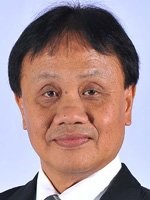
Emeritus Prof. Dr. Jailani Md Yunos
MRIVET / UTHM

Prof. Dr. Zhiqun Zhao
Beijing Normal University, Beijing

Prof. Dr. Niwat Moonpa
Rajamangala University of Technology Lanna (RMUTL)
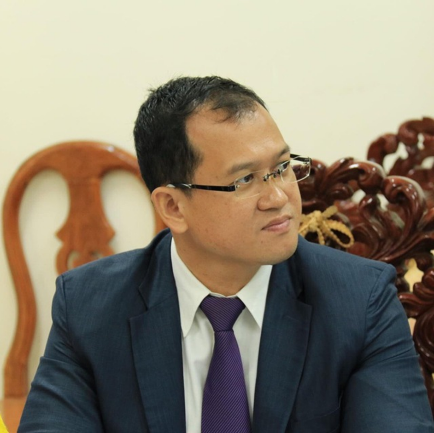
Songheang Ai
Regional Center for Technical Education Development (SEAMEO TED)
Scientific Advisory Board

Prof. Dr. Dr. h. c.Georg Spöttl
University Bremen / Steinbeis Transfer Center

Ass. Prof. Dr.Sirilak Hanvatananukul
Rajamangala University of Technology Thanyaburi Department of Technical Education

Dr. Joachim Dittrich
University of Applied Sciences Bremerhaven Windpower Further Education Alliance
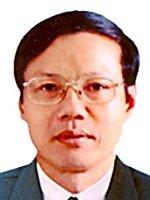
Dr. Phan Sy Nghia
Namdinh University of Technology Education
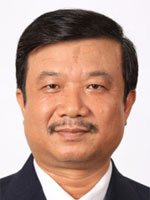
Dr. phil. Tuan Nguyen Van
University of Technical Education Ho Chi Minh City

Dr. Agus Setiawan
Universitas Pendidikan Indonesia Faculty of Technology and Vocational Education

H.E Dr. Yok Sothy
National Technical Training Institute

Prof. Dr. Boualinh Soysouvanh
Faculty of Engineering, National University of Laos Sokpaluang Campus, Sisattanak District, Ventiane, Lao PDR

Dr. Ana Syarief
Indonesia University of Education, Bandung

Dr. M. Bruri Triyono
Yogyakarta State University Faculty of Engineering

Associate Prof. Dr. Jiping Wang
Tongji University, Shanghai

Dr. Jianping Zheng
Institut für Berufsbildung, Tongji University Shanghai
Reviewers

Suci Tuty Putri
Universitas Pendidikan Indonesia
Prof. Dr. Dr. h.c. Thomas Schröder
TU Dortmund University, Germany
Emeritus Prof. Dr.Jailani Md Yunos
Universiti Tun Hussein Onn Malaysia

Chee Sern Lai
Universiti Tun Hussein Onn Malaysia
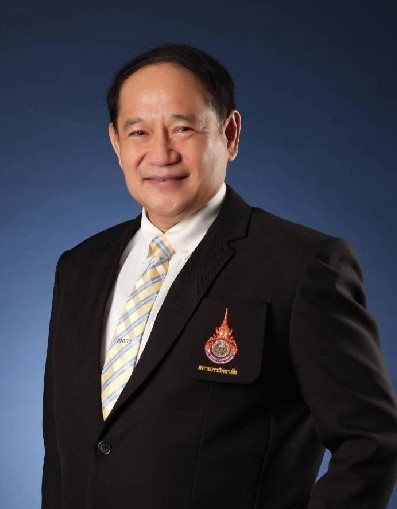
Sommai Pivsa-Art
Rajamangala University of Technology Thanyaburi, Thailand

Rupert Maclean
School of Education, University of Tasmania, Hobart, Australia and Education University of Hong Kong

Professor Mustapha Ramlee
Universiti Pendidikan Sultan Idris
Dr. Agus Setiawan
Universitas Pendidikan Indonesia

Dr. Niwat Moonpa
Rajamangala University of Technology Lanna (RMUTL)

Dr. Paryono Paryono
SEAMEO VOCTECH Brunei

Dr. Ricky Yuk-kwan Ng
The Hong Kong Academy for Performing Arts

PROF. MADYA Ts. Dr. Badaruddin Bin Ibrahim
UTHM

Prof. Dr. Dr. h. c. Georg Spöttl
University Bremen / Steinbeis Transfer Center

Asst. Prof. Sureewan Rajchasom
Rajamangala University of Technology Lanna

Dr. Anne Busian
Technical University of Dortmund

G.R.E.A.T. / Vivekananda Institute of Bio-Technology
G.R.E.A.T. / Vivekananda Institute of Bio-Technology
Assoc. Prof. Dr. Margarita Pavlova
The Education University of Hong Kong
Prof. Dr. Zhiqun Zhao
Beijing Normal University, Beijing

B. Eng., M.Sc. Phuong Chi Diep
Ho Chi Minh City University of Technology and Education, Vietnam
Associate Prof. Dr. Jiping Wang
Tongji University, Shanghai
Dr Joachim Dittrich
Universitas Pendidikan Indonesia

Cheol Hee Kim
UNESCO Bangkok
Assoc. Prof. Dr. Numyoot Songthanapitak
Rajamangala University of Technology Thanyaburi

Dr. Julia Fecke
TU Dortmund University, Germany
Supervision


Publication Ethics
Like all journals, TVET@Asia follows clear publication ethics. For more details please have a look at our publication ethics and malpractice statement requirements below.
Partner Institutions
Since its creation in 2013, TVET@Asia has always cooperated with partner institutions in Southeast Asia. Here you will find more information on our partners!
Call for Papers:
Issue 28: Bridging the Skills Gap: Industry–TVET Partnerships for Workforce Readiness
TVET@Asia invites researchers, scholars, practitioners, and policymakers to contribute to a special issue focused on the theme of Bridging the Skills Gap: Industry–TVET Partnerships for Workforce Readiness.
Scope and Objective:
The rapid acceleration of digitalization, the transformative influence of artificial intelligence (AI) and robotics, the transition toward a green economy, and the volatility of global markets have created an urgent need for a workforce capable of adapting through continuous skill expansion and professional development. As industry requirements evolve more rapidly than traditional curricula, the synergy between Technical and Vocational Education and Training (TVET) and the industrial sector has become a strategic imperative. To ensure genuine workforce readiness, we must move beyond superficial cooperation toward deep, systemic partnerships.
Sustainable industry-TVET partnerships require alignment across multiple dimensions. At the institutional and legal level, public-private partnerships must be grounded in clear obligations and mutual requirements. Curricula must integrate the evolving competences demanded by industry, while teaching and learning methodologies should mirror actual workplace conditions. Furthermore, TVET institutions require the necessary infrastructure to support high-quality work-based learning, and educators must maintain an up-to-date understanding of industrial production processes to deliver industry-driven skills. Achieving these goals requires structured communication frameworks to facilitate continuous exchange between all stakeholders.
This issue aims to examine the various dimensions of industry-TVET partnerships in promoting workforce readiness. We invite original research papers, conceptual and theoretical works, policy-focused studies, and practical case analyses that investigate how established private-public partnerships can close the skills gap and enhance employability. Contributions may also provide critical reflections on policies, models, innovations, and the broader impact of these partnerships on learners, industries, and communities.
Potential areas of interest include, but are not limited to:
- Co-Curriculum Development: Strategies for agile curriculum design involving industry stakeholders to ensure alignment with real-world labor market needs.
- Work-Integrated Learning: Evaluation of dual-education systems, apprenticeships, and internship models that effectively transition students from classroom to workplace.
- Teacher & Trainer Professionalization: Models for "industry-to-classroom" knowledge transfer and the continuous upskilling of TVET instructors.
- Policy & Governance: Analysis of public-private partnership frameworks that incentivize industry investment in vocational education.
- Inclusive Readiness: Ensuring that TVET partnerships address equity, diversity, and the inclusion of marginalized groups in the modern workforce.
This issue is intended to serve as an important reference and knowledge platform for educators, industry stakeholders, researchers, and policymakers who are dedicated to strengthening TVET’s role in bridging skills gap and promoting work readiness.
Submission Guidelines:
Authors are invited to submit their original manuscripts following the guidelines provided by TVET@Asia Online Journal. All submissions will undergo a rigorous peer-review process to ensure the quality, relevance, and originality of the research. Manuscripts should be written in English and adhere to the journal's formatting and citation style.
Please note that the journal does not provide language editing or copyediting services. Authors are therefore responsible for ensuring that their manuscripts are written in clear and correct English prior to submission. Authors are encouraged to carefully check grammar, spelling, and language quality before submission and may consider using professional language editing services or AI-supported writing tools where appropriate.
We welcome submissions from any interested authors!
We look forward to receiving your contributions!
Please find below:
- the template for the article template_TVETAsia.docx
- the form for the abstract form-abstract_tvet-online.docx
Editors of Issue 28
These are the editors of our upcoming TVET@Asia issue:
Adeline Goh Yuen Sze (University of Brunei Darussalam)
Philipp Grollmann (TU Dortmund University)
Siriphorn Schlattmann (Rajamangala University of Technology Lanna)
Lee Ming Foong (Tun Hussein Onn University of Malaysia)
Become an Author
This Call for Papers is open to any interested author.
We invite scholars, scientists, curriculum developers, practitioners and teachers from the TVET community to contribute to the upcoming Issue 28 of TVET@Asia.
We look forward to receiving your contributions!
TIMELINE
Submit Your Abstract
by August 30th, 2026
To participate we ask you to send us the following documents:
- an abstract of no more than one page (please download this form),
- a short CV/profile (half page),
- a photograph of yourself, and
- a list of publications
Please submit your work via E-Mail:
Abstract Notification
by September 11th, 2026 you will be informed whether your abstract has been accepted.
Paper Submission
Please use this article template to submit your paper.
The full draft paper should be submitted until: October 20th, 2026.
Peer Review
Notification of acceptance and peer review feedback by November 27th, 2026.
Final Submission
Submission of the final, correctly-formatted paper by January 8th, 2027.
Publication
Tentative publication date: February 12th, 2027.
Sign up for our Newsletter
Here you can subscribe to our newsletter! Through the newsletter we will inform you about new Calls for Papers, the publication of new issues of TVET@Asia as well as the latest publications and events in the field of Technical and Vocational Education and Training.
Here you can subscribe to our newsletter! Through the newsletter we will inform you about new Calls for Papers, the publication of new issues of TVET@Asia as well as the latest publications and events in the field of Technical and Vocational Education and Training.