Abstract
The transition towards environmentally sustainable and digitally driven economies has increased demand for green competencies across technical and vocational education and training (TVET). This integrative review examined how inclusive digital pedagogies support green competencies development and address skills development challenges within TVET. Guided by the capability approach, the review combined bibliometric analysis and PRISMA-guided systematic synthesis of 34 Scopus-indexed studies published between 2015 and 2026. Findings reveal a rapidly expanding field centred on sustainable development, with research concentrated in Europe and Asia. Online, blended, MOOC-based, immersive, simulation, and artificial intelligence-supported pedagogies emerged as the most prominent approaches. These pedagogies supported the development of sustainability awareness, integrated sustainability competencies, green technical skills, circular economy competencies, and sector-specific sustainability practices. However, research remains heavily focused on learner competency development, while teacher capacity building and green credential recognition receive limited attention. The review highlights priorities for policy, practice, and future research aimed at promoting equitable and sustainable workforce development through green TVET.
Keywords: Technical and vocational education and training (TVET), green competencies, sustainable development, digital pedagogy, and skills development.
1 Introduction
Although green competencies and digital pedagogy have attracted growing scholarly attention, these bodies of literature have largely evolved in parallel rather than in dialogue. Research on sustainability education has increasingly centred on conceptualising and operationalising the competencies required to support environmentally responsible practices, sustainable lifestyles, and green economic transitions (Wiek et al. 2011; Brundiers et al. 2021; Bianchi et al. 2022). Concurrently, research on digital pedagogy has examined how emerging technologies reshape teaching, learning, learner engagement, and educational access across diverse educational contexts, particularly through online, blended, and technology-enhanced learning environments (Bond et al. 2021; Bozkurt et al. 2020; Ohanu et al. 2024; Orji & Perumal 2024a, 2024b). However, considerably less attention has been devoted to understanding how inclusive digital pedagogies can facilitate the development of green competencies within TVET. Existing studies are dispersed across sustainability education (Brundiers et al. 2021; Bianchi et al. 2022), digital pedagogy (Bond et al. 2021; Tsheko & Orji 2025), workforce development and future skills (CEDEFOP 2023), and vocational education and training (Perumal & Orji 2024). While recent reviews have examined green skills development or digital learning in isolation (Prasetya et al. 2025; Sholikhah et al. 2026), there remains no comprehensive synthesis of how inclusive digital pedagogies support green competencies development within TVET contexts.
The significance of this gap is particularly evident in the Global South, where the demands of sustainability transitions intersect with persistent inequalities in access to education, technology, and employment opportunities. Although green and digital transformations are global phenomena, research and policy attention remain concentrated in higher-income regions, while many low- and middle-income countries continue to face substantial challenges in developing the competencies required for emerging labour markets (McGrath & Ramsarup 2024; UNESCO 2024; ILO 2025; WEF 2025). In these contexts, limitations in digital infrastructure, institutional capacity, and workforce development systems restrict learners’ opportunities to acquire green and digital skills, making equitable access to learning a fundamental concern.
In response, this integrative review examines how inclusive digital pedagogies support green competencies development within TVET and address key skills development challenges. Guided by the capability approach, the review synthesises bibliometric and thematic evidence to illuminate the relationships among pedagogy, competency development, and learner inclusion within sustainability transitions (Snyder 2019; Torraco 2016). In doing so, it consolidates a fragmented body of knowledge, identifies areas of convergence and neglect, and informs future research, policy, and practice on equitable green workforce development. Accordingly, the review is guided by four research questions:
What is the bibliometric profile of research at the intersection of green competencies, inclusive digital pedagogies, and TVET, with respect to its annual publication trends, document type distribution, geographic spread, and the thematic structure revealed by keyword co-occurrence?
Which inclusive digital pedagogies are deployed to support green competencies development in TVET?
Which green competencies are developed through these inclusive digital pedagogies, and in which learning contexts and for which groups of learners?
How do inclusive digital pedagogies address the skills development challenges of the field, and which challenges remain unmet?
2 Theoretical Framework
This review is grounded in the capability approach developed by Sen (1999) and further elaborated by Nussbaum (2011), which shifts educational evaluation from the acquisition of skills to the expansion of what individuals are genuinely able to do and become. Within this framework, capabilities represent the real opportunities available to achieve valued outcomes, while functionings refer to the states and activities individuals realise. Conversion factors, whether personal, social, or environmental, mediate the relationship between available resources and the capabilities individuals can effectively develop and exercise (Sen 1999). In this review, TVET provides the developmental context in which learning opportunities are made available to diverse learners. It plays a strategic role in sustainability transitions by translating evolving labour market demands into competencies developed through education and training (UNESCO-UNEVOC 2024). Beyond workforce preparation, TVET expands opportunities for individuals to pursue sustainable and meaningful livelihoods (Sen 1999; McGrath & Ramsarup 2024).
Within this framework, green competencies represent the desired capabilities, comprising the knowledge, skills, values, and dispositions required for environmentally responsible action and meaningful participation in green economies (Bianchi et al. 2022). These include environmental awareness, sustainable resource management, green technological skills, systems thinking, and sustainability-oriented problem solving (Brundiers et al. 2021; Wiek et al. 2011). Inclusive digital pedagogies function as the conversion factors that transform learning opportunities into attainable capabilities for diverse learners. Through approaches such as simulations, blended learning, mobile learning, open educational resources, and immersive technologies, they broaden participation and facilitate green competencies development across varied, often resource constrained contexts (Veytia Bucheli et al. 2024; Orji & Perumal 2024a, 2024b).
This theoretical framing directly shapes the four research questions guiding this review. The bibliometric question maps the landscape within which green capability development is situated. The pedagogy question identifies the conversion factors deployed across TVET contexts. The competency question examines the valued functionings that learners develop through those pedagogies. The skills development challenge question interrogates the structural conditions that enable or constrain capability conversion across diverse TVET contexts. This lens is revisited consistently in the results section to ensure coherence between the framework and the evidence synthesised.
3 Methodology
3.1 Research Design
This study employed an integrative review design, which is well suited to synthesising diverse evidence on complex and multidisciplinary topics such as green competencies, inclusive digital pedagogies, and TVET (Torraco 2016; Whittemore & Knafl 2005). The review combined bibliometric analysis with a PRISMA-guided systematic synthesis to examine research trends, publication patterns, thematic structures, pedagogical approaches, and skills development challenges. Together, these methods provided a comprehensive understanding of the field. The review was limited to peer-reviewed Scopus-indexed publications published between 2015 and 2026 (Snyder 2019).
3.2 Study Review Framework and Reporting Guidelines
This review was guided by the integrative review framework of Whittemore and Knafl (2005), which offers a systematic approach to synthesising evidence from diverse methodological traditions through five stages: problem identification, literature search, data evaluation, data analysis, and presentation of findings. To strengthen transparency and reporting quality, the study followed the PRISMA 2020 guidelines (Page et al. 2021), which governed the identification, screening, eligibility assessment, and inclusion of studies. Combining the two frameworks reinforced methodological rigour. As Figure 1 shows, the five integrative stages align with the PRISMA 2020 phases, with the data analysis stage splitting into two parallel streams, bibliometric analysis and systematic evidence synthesis, before converging into an integrated analysis and presentation of findings.
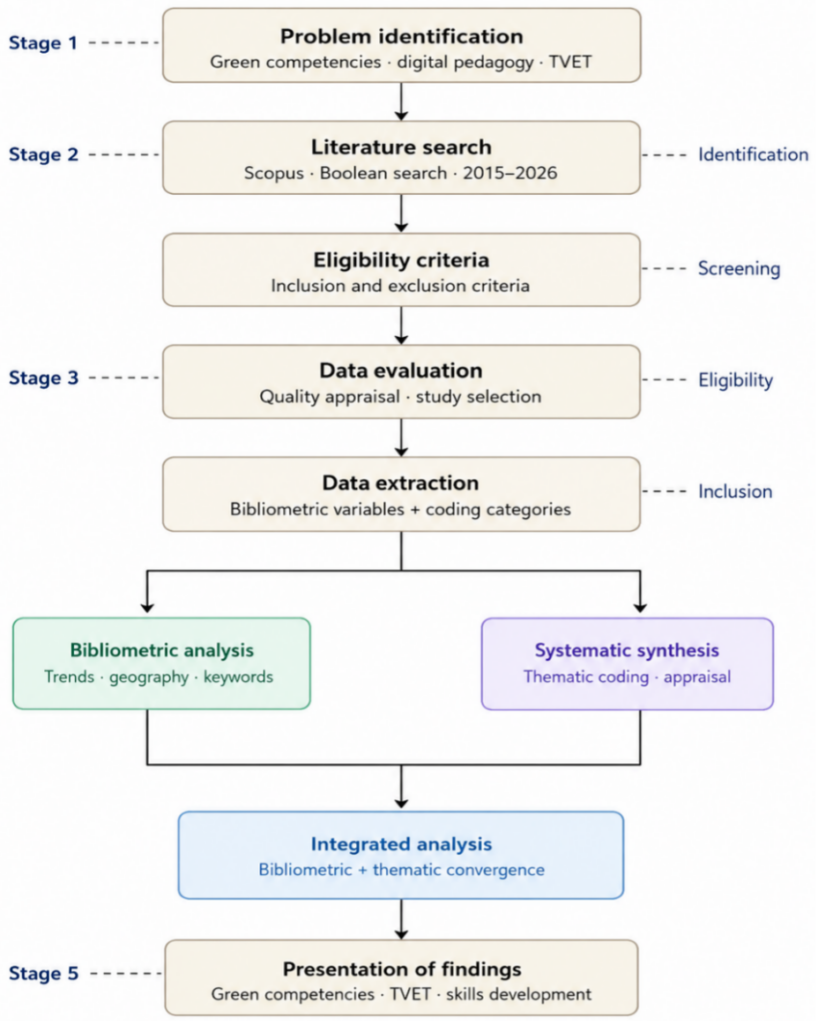
Figure 1: Study Review Framework and Reporting Guidelines
3.3 Data Source and Search Strategy
The literature search was conducted in Scopus, selected for its extensive coverage of peer-reviewed work across education, sustainability, technology, and vocational training, suiting both bibliometric and systematic review studies (Baas et al. 2020). The search covered 2015 to 2026 to capture contemporary developments in sustainability transitions, digital transformation, and workforce skills development. A structured strategy was built around three core concepts, namely TVET, green competencies, and digital pedagogy, with keywords, synonyms, and related terms for each combined through Boolean operators (AND, OR) to balance retrieval and precision, and applied to titles, abstracts, and keywords. Table 1 presents the full strategy. The search returned 297 records, from which 6 duplicates were removed, leaving 291 for screening.
Table 1: Scopus Search Strategy
| Concept | Search Terms |
| TVET | “technical and vocational education and training” OR TVET OR “vocational education” OR “vocational training” OR “technical education” OR “career and technical education” OR CTE OR “skills training” OR “workforce training” OR “apprenticeship” OR “apprenticeships” OR “work-based learning” OR WBL OR “occupational training” OR “industrial training” OR “professional training” OR “skills development” OR “training institutions” OR “technical colleges” OR “polytechnic education” OR “further education” OR “continuing vocational education” OR CVET OR “initial vocational education” OR IVET |
| Green Competencies and Sustainability | “green skills” OR “green competencies” OR “sustainability competencies” OR “sustainable skills” OR “environmental skills” OR “eco skills” OR “green jobs” OR “green economy” OR “sustainable development” OR “education for sustainable development” OR ESD OR “environmental education” OR “sustainability education” OR “climate education” OR “circular economy” OR “low carbon” OR “low-carbon economy” OR “renewable energy” OR “environmental sustainability” OR “sustainable practices” OR “green transition” OR “green transitions” OR “eco-friendly practices” |
| Digital Pedagogy | “digital pedagogy” OR “technology enhanced learning” OR TEL OR “e-learning” OR elearning OR “online learning” OR “blended learning” OR “hybrid learning” OR “mobile learning” OR “m-learning” OR “digital learning” OR “virtual learning” OR “learning management system” OR LMS OR “virtual labs” OR “virtual laboratories” OR “simulation” OR “digital simulation” OR “educational technology” OR EdTech OR “open educational resources” OR OER OR MOOCs OR “flipped classroom” OR “project-based learning” OR “problem-based learning” OR “collaborative learning platforms” |
3.4 Eligibility Criteria
Explicit inclusion and exclusion criteria were established to ensure the relevance and quality of the reviewed literature. Studies were included if they were peer-reviewed, published between 2015 and 2026, written in English, and focused on TVET or related vocational learning contexts. Eligible studies were also required to address green competencies, sustainability-related skills, or environmental sustainability, alongside a digital pedagogy component, such as technology-enhanced learning, simulations, blended learning, mobile learning, virtual laboratories, or open educational resources. Journal articles, conference papers, review articles, books, and book chapters indexed in Scopus were included. Studies lacking relevance to TVET, green competencies, or digital pedagogy, as well as editorials, notes, letters, errata, and duplicate records, were excluded.
Table 2: Inclusion and Exclusion Criteria
| Inclusion Criteria | Exclusion Criteria | |
| 1 | Peer-reviewed publications | Editorials, notes, letters, errata, and short communications |
| 2 | Published between 2015 and 2026 | Publications outside 2015 and 2026 |
| 3 | Published in English | Non-English publications |
| 4 | Focus on TVET, Green Competencies/ Sustainability and digital pedagogy | Not related to TVET, Green Competencies and digital pedagogy |
| 5 | Journal articles, conference papers, review articles, books, and book chapters | Non-indexed publications and duplicate records |
3.5 Study Selection Process
Study selection followed the PRISMA 2020 guidelines to ensure transparency and replicability (Page et al. 2021). The Scopus search identified 297 records, from which 6 duplicates were removed, leaving 291 for screening. Titles, abstracts, and keywords were first examined for relevance to the intersection of TVET, green competencies or sustainability, and digital pedagogy, and 239 records that did not address all three were excluded. The remaining 52 studies underwent full-text assessment, during which 18 were excluded for inadequate focus on these areas. The final dataset comprised 34 studies meeting all inclusion criteria, which informed both the bibliometric analysis and the systematic evidence synthesis. Exclusion reasons were documented, as shown in the PRISMA flow diagram (Figure 2).
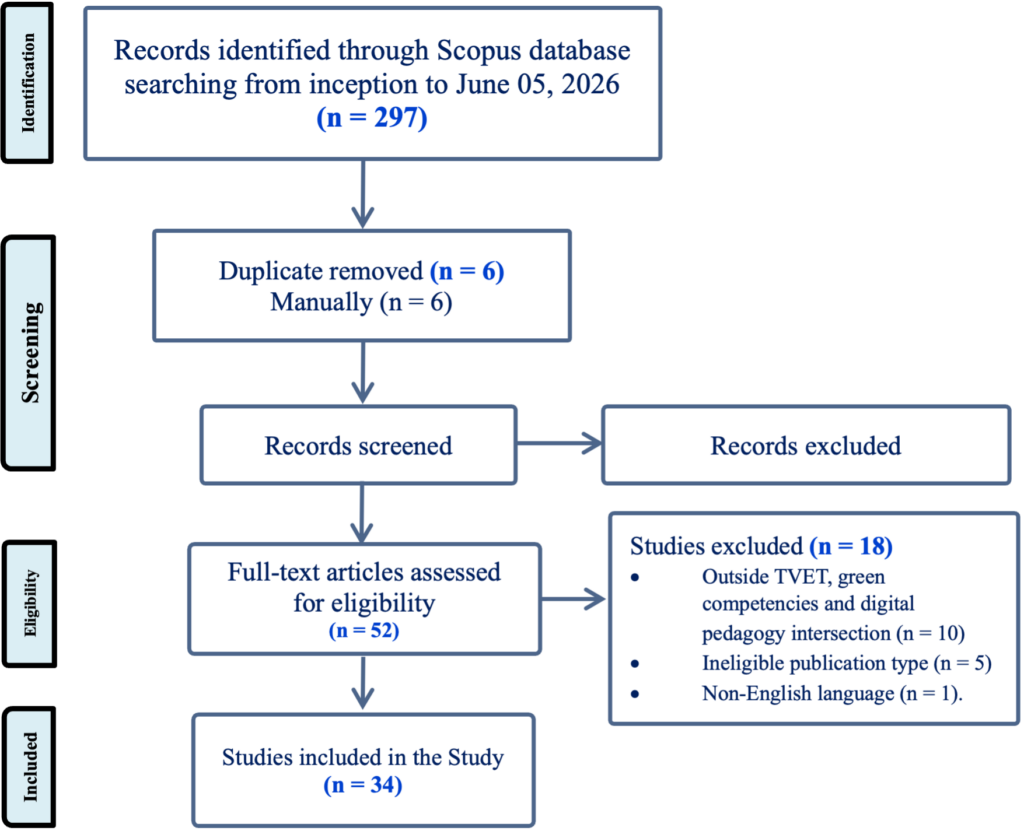
Figure 2: PRISMA 2020 Flow Diagram of the Study Selection Process
3.6 Data Extraction and Analysis
A structured extraction procedure ensured consistency and transparency. Following eligibility assessment, data were extracted from each included study using a predefined coding framework aligned with the bibliometric and synthesis objectives. The bibliometric variables were publication year, document type, source title, authorship, country, author keywords, and citation counts, supporting the mapping of publication trends, productivity, geographic distribution, source impact, and thematic relationships. For the synthesis, studies were coded for characteristics, type of inclusive digital pedagogy, green competencies focus, learning context, target learner group, reported outcomes, and the skills development challenge addressed. Analysis then combined the two streams. Bibliometric analysis examined publication trends, document types, geographic distribution, outlets, and keyword co-occurrence, using VOSviewer to map the intellectual structure and evolution of the field (Van Eck & Waltman 2010). Thematic synthesis interpreted the evidence on inclusive digital pedagogies, green competencies, and skills development challenges in TVET. Findings from both streams were subsequently integrated to provide a comprehensive understanding of research trends, pedagogical approaches, competency development, and strategies for addressing skills development constraints.
4 Results
This section presents the findings of the integrative review. It begins with a bibliometric analysis of research trends, publication characteristics, geographic distribution, and thematic structures, followed by a thematic synthesis of inclusive digital pedagogies, green competencies, and skills development challenges. The section concludes with an integrated analysis linking research trends, pedagogical approaches, competency development, and future directions for the field.
Bibliometric Analysis of Research on Green Competencies, Inclusive Digital Pedagogy, and TVET
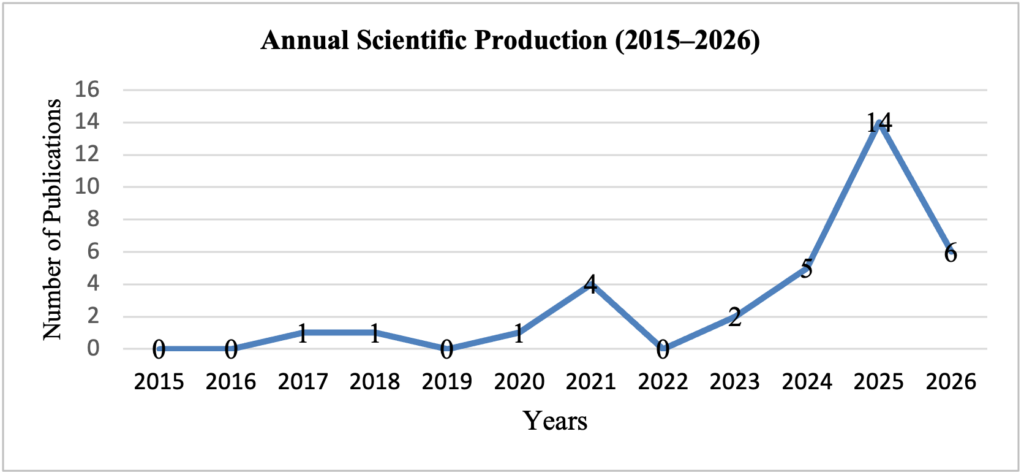
Figure 3: Annual Scientific Production on Green Competencies, Inclusive Digital Pedagogies, and TVET (2015–2026)
Figure 3 presents the annual scientific production on green competencies, inclusive digital pedagogies, and TVET from 2015 to 2026. The field is relatively recent, with no publications recorded in 2015, 2016, 2019, or 2022. Output rose modestly in 2021, then grew steadily from 2023, accelerating sharply to five studies in 2024 and fourteen in 2025. That peak represents approximately 41.2% of the included corpus. The six publications recorded for 2026 reflect a year still in progress at data collection. The publication trajectory reflects the emergence of a field that has gained considerable scholarly momentum in recent years.
Figure 4 presents the distribution of publications by document type. Conference papers constituted the largest category (n = 16, 47.1%), followed by journal articles (n = 10, 29.4%), book chapters (n = 5, 14.7%), and review articles (n = 3, 8.8%). The dominance of conference papers suggests that the field remains in an emerging stage of development, while the substantial proportion of journal articles indicates growing scholarly consolidation. This publication pattern reflects an evolving and interdisciplinary field attracting increasing academic attention to sustainability, digital transformation, and workforce development.
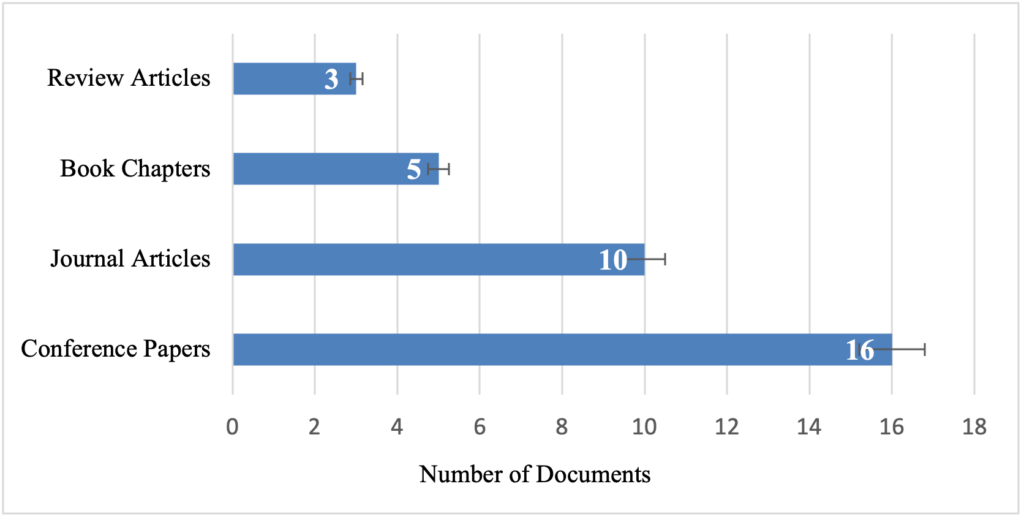
Figure 4: Distribution of Publications by Document Type in Research on Green Competencies, Inclusive Digital Pedagogies, and TVET (2015–2026)
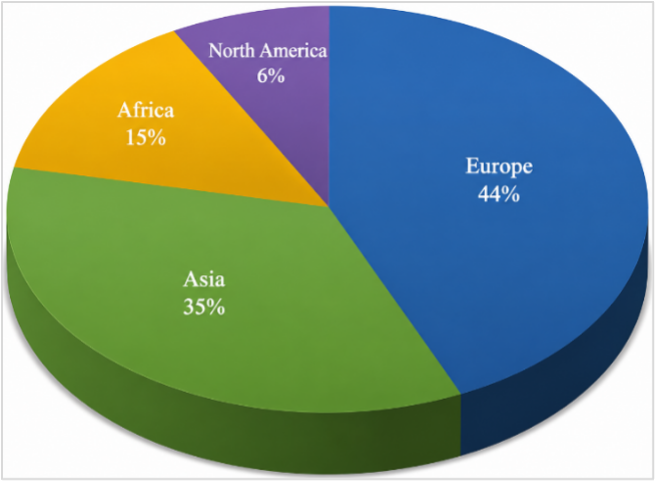
Figure 5: Geographic Distribution of Research based on Countries and Regional Contributions
Figure 5 presents the regional distribution of research on green competencies, inclusive digital pedagogies, and TVET. Europe accounted for the largest share of publications (44.1%), followed by Asia (35.3%), Africa (14.7%), and North America (5.9%). Within Europe, Greece (n = 3) was the leading contributor, followed by Germany (n = 2), Finland (n = 2), Romania (n = 2), Portugal (n = 1), Switzerland (n = 1), Cyprus (n = 1), Spain (n = 1), and the United Kingdom (n = 1). In Asia, Indonesia (n = 5) dominated the field, while China (n = 2), India (n = 2), Malaysia (n = 1), the Philippines (n = 1), and South Korea (n = 1) also contributed. African research originated from South Africa (n = 1), Zimbabwe (n = 1), Egypt (n = 1), Nigeria (n = 1), and Malawi (n = 1), whereas North American contributions came exclusively from the United States (n = 2). The geographic pattern observed suggests that research activity remains concentrated in Europe and Asia, with comparatively limited participation from Africa.
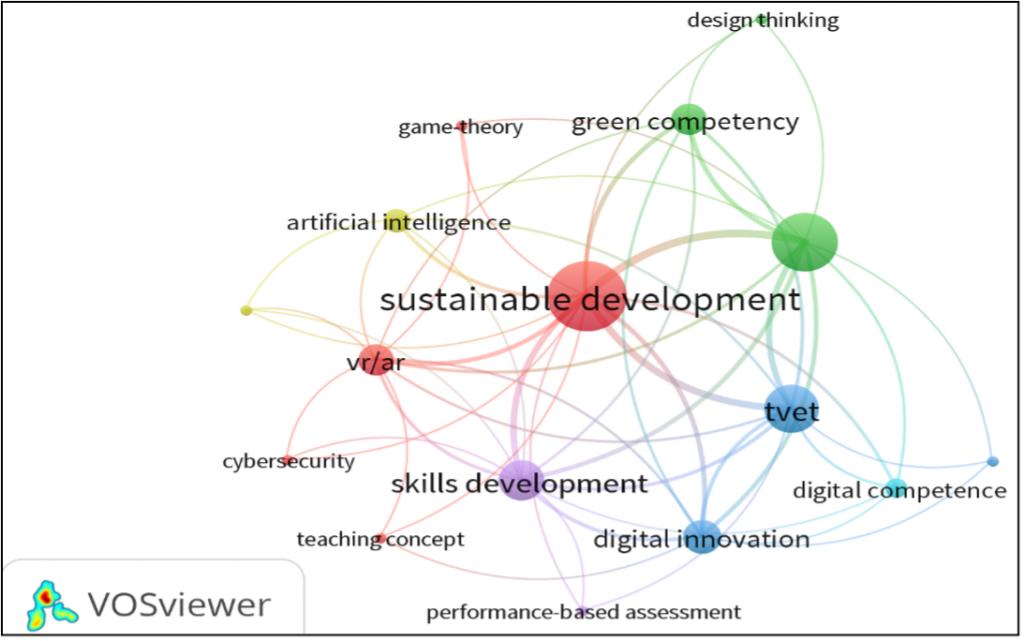
Figure 6: Keyword Co-occurrence Network of Research on Sustainable Development, Inclusive Digital Pedagogies, and TVET (2015–2026)
Figure 6 presents the VOSviewer keyword co-occurrence network of research on green competencies, inclusive digital pedagogies, and TVET from 2015 to 2026. The network comprises four thematic clusters. The first and most prominent cluster is anchored by sustainable development, the central node of the network, with strong connections to TVET, skills development, green competencies, and education for sustainable development. The second cluster groups digital pedagogy keywords, including digital competence, technology-enhanced learning, and e-learning, reflecting the growing role of digital transformation in TVET research. The third cluster brings together emerging technology keywords, notably artificial intelligence, virtual reality, and augmented reality, which occupy bridging positions between the sustainability and digital pedagogy clusters. The fourth and smallest cluster centres on inclusion and equity themes, including open educational resources, mobile learning, and access. Collectively, the network confirms that research is increasingly organised around the convergence of sustainability, digital transformation, and vocational skills development. From a capability perspective, the geographic concentration of research in Europe and Asia signals unequal access to knowledge production processes that shape green TVET agendas, raising questions about whose capabilities and whose contexts are centred in the field.
4.1 Types of Inclusive Digital Pedagogies Deployed in Green TVET
The reviewed studies drew on seven distinct digital pedagogy categories. Table 3 presents these categories, their representative forms, and the associated studies.
Table 3: Inclusive digital pedagogies supporting green competencies development in TVET
| Pedagogy categories | Representative forms | Studies |
| Online, blended, flipped, and MOOC learning | e-learning, MOOCs, flipped classroom, blended delivery | Chirambo (2018); Leppänen & Kuula (2019); Blaga et al. (2021); Avadanei et al. (2021); Ibrahem et al. (2024); Pillet & Fragnière (2025); Pasipamire et al. (2025) |
| ICT-integrated instruction and open educational resources | technology-integrated teaching, OER, digital media | Kadyirov et al. (2021); Kaur et al. (2024); Beutner & Schneider (2024); Sotiropoulos et al. (2025); Muktiarni et al. (2026) |
| Immersive technologies (VR, AR, XR) | virtual, augmented, and extended reality | Ortega-Gras et al. (2023); Amaxilatis et al. (2025); Duran et al. (2025) |
| Simulation and digital twins | system and sand-table simulation, digital twins | Vrysouli et al. (2023); Yang et al. (2026) |
| Artificial intelligence and intelligent tools | AI tutoring, AI toolkits, generative AI | Prasetya et al. (2025); Pais et al. (2026) |
| Platforms, virtualization, smart and mobile technologies | learning platforms, virtualization, smart farming, mobile apps | Wee et al. (2024); Yiangou & Stavrou (2025); Hayat et al. (2025); Yvonne Khomo et al. (2025); Vitalocca et al. (2026) |
| Game-based, micro-credential, and digital skilling approaches | serious games, gamification, micro-credentials, digital skills programmes | Despeisse & Lunt (2017); Tunji-Olayeni et al. (2021); Halttunen et al. (2024); Li & Wang (2025); Sholikhah et al. (2026) |
As Table 3 shows, the reviewed studies drew on a broad repertoire of inclusive digital pedagogies. Online, blended, flipped, and MOOC based learning was the most frequent family (n = 7, 20.6%), valued for widening participation among distant, working, and underserved learners. Immersive technologies, ICT-integrated instruction with open resources, and platform, virtualization, and mobile approaches each accounted for a further five studies, while artificial intelligence (n = 4) and simulation and digital twins (n = 3) supported personalised and experiential learning. Within the capability approach, these pedagogies function as conversion factors, transforming access to digital tools and green content into real opportunities for diverse learners to develop sustainability-related capabilities.
4.2 Green Competencies Outcomes Developed through Inclusive Digital Pedagogies
The reviewed studies addressed diverse green competencies across varied learning contexts and learner groups. Table 4 summarises the competency clusters, predominant learning contexts, and identifying target learners.
Table 4: Green competencies developed through inclusive digital pedagogies, with learning contexts and target learners
| Green competencies cluster | Predominant learning context and target learners | Studies |
| Sustainability awareness and literacy (SDG, climate and carbon, ocean and environmental literacy) | Mixed vocational, tertiary, and outreach settings; broad and equity groups including women, youth, and Global South learners | Chirambo (2018); Tunji-Olayeni et al. (2021); Ibrahem et al. (2024); Li & Wang (2025); Hayat et al. (2025); Prasetya et al. (2025); Yvonne Khomo et al. (2025); Muktiarni et al. (2026) |
| Integrated sustainability competence and mindset | Vocational colleges and workforce training; secondary vocational students and trainees | Kadyirov et al. (2021); Kaur et al. (2024); Duran et al. (2025); Amaxilatis et al. (2025); Yang et al. (2026); Pais et al. (2026) |
| Green and energy transition technical skills (green skills, renewable energy, energy efficiency) | Technician and engineering training; technicians and the energy and manufacturing workforce | Despeisse & Lunt (2017); Sotiropoulos et al. (2025); Pasipamire et al. (2025); Vitalocca et al. (2026); Sholikhah et al. (2026) |
| Circular economy and sustainable production | Textile, fashion, and furniture education; further and vocational education learners | Leppänen & Kuula (2019); Blaga et al. (2021); Avadanei et al. (2021); Ortega-Gras et al. (2023) |
| Cross-cutting green IT, green economy, and environmental protection competencies | Information technology and industrial workforce settings; upskilling learners and employees | Yiangou & Stavrou (2025); Beutner & Schneider (2024) |
| Green building, construction, and design competencies | Construction and architectural vocational education; students and trainees | Vrysouli et al. (2023) |
| Sustainable sector practice (tourism and agriculture) | Tourism and agricultural vocational education; hospitality, tourism, and farming learners | Wee et al. (2024); Halttunen et al. (2024); Pillet & Fragnière (2025) |
As Table 4 indicates, the green competencies addressed cluster at two levels. The largest groups developed sustainability awareness and literacy (n = 8, 23.5%) and an integrated sustainability competence and mindset (n = 7, 20.6%), which together echo the values and systems thinking emphasised in established frameworks such as GreenComp (Bianchi et al. 2022). The remaining studies cultivated more applied and occupation-specific competencies, namely green and energy transition skills (n = 5), circular economy and sustainable production (n = 4), cross-cutting green IT, economy, and protection competencies (n = 4), green building and design (n = 3), and sustainable sector practice in tourism and agriculture (n = 3). Learning contexts were dominated by vocational colleges and technician or workforce training, and the target learners were chiefly vocational students and trainees, although an equity-oriented subset deliberately reached women, youth, and learners in the Global South. Interpreted through the capability approach, the competency clusters identified here represent the valued functionings that inclusive digital pedagogies enable, moving learners from mere exposure to green content toward genuine capability development within their specific vocational contexts.
4.3 Addressing Skills Development Challenges through Inclusive Digital Pedagogy
The reviewed studies identified seven skills development challenges addressed through inclusive digital pedagogy. Table 5 presents each challenge, the pedagogical response, and the associated studies.
Table 5: Skills development challenges addressed through inclusive digital pedagogy
| Skills development challenge | How inclusive digital pedagogy responds | Studies | |
| Closing the applied, occupation-specific green skills gap | Immersive, simulation, blended, and platform tools deliver safe, repeatable, resource-light practice of technical green tasks | Despeisse & Lunt (2017); Leppänen & Kuula (2019); Blaga et al. (2021); Avadanei et al. (2021); Vrysouli et al. (2023); Ortega-Gras et al. (2023); Weeet al. (2024); Sotiropoulos et al. (2025); Pasipamire et al. (2025); Amaxilatis et al. (2025); Yiangou & Stavrou (2025); Pillet & Fragnière (2025); Yang et al. (2026) | |
| Integrating green content into crowded vocational curricula | Digital media, AI, and platform tools embed sustainability into existing programmes rather than adding it separately | Kadyirov et al. (2021); Kaur et al. (2024); Hayat et al. (2025); Pais et al. (2026); Vitalocca et al. (2026) | |
| Aligning and scaling emerging technologies for sustainable training | AI tutoring, open resources, and decision tools help select, integrate, and scale fit-for-purpose technologies | Beutner & Schneider (2024); Duran et al. (2025); Prasetya et al. (2025) | |
| Raising sustainability literacy, awareness, and engagement | Games, mobile apps, and technology-integrated instruction motivate and build foundational green understanding | Li & Wang (2025); Yvonne Khomo et al. (2025); Muktiarni et al. (2026) | |
| Widening inclusive and equitable access to green skilling | MOOCs, e-learning, and digital skills initiatives reach women, youth, and underserved Global South learners | Chirambo (2018); Tunji-Olayeni et al. (2021); Ibrahem et al. (2024) | |
| Building teacher and trainer capacity for green digital pedagogy | Competency frameworks and digital upskilling for vocational educators | Sholikhah et al. (2026) | |
| Recognising and certifying green skills for employability | Micro-credentials and digital badges signal flexible green learning to the labour market | Halttunen et al. (2024) | |
As Table 5 shows, the reviewed evidence is concentrated on a narrow band of challenges. Almost half of the studies (n = 16, 47.1%) targeted the applied, occupation-specific green skills gap, using immersive, simulation, and platform pedagogies to provide practice that is otherwise hazardous, costly, or dependent on scarce equipment, and a further 17.6% addressed the integration of green content into already crowded vocational curricula. Smaller bodies of work tackled technology alignment and scaling (n = 4), sustainability literacy (n = 3), and equitable access for women, youth, and Global South learners (n = 3). The two enabling challenges that sustain any green skilling system were the least addressed, with only one study each on building teacher and trainer capacity (Sholikhah et al. 2026) and on recognising and certifying green skills (Halttunen et al. 2024). Interpreted through the capability approach, the field has invested heavily in conversion factors at the point of learning, yet has largely neglected the structural enablers, namely a capable teaching workforce and credible credential recognition, that determine whether expanded capabilities translate into valued and sustainable labour market functionings. These two areas therefore represent the most consequential gaps for future research, policy, and practice.
4.4 Integrated Analysis: Connecting Trends, Pedagogies, Competencies, and Challenges
Reading the four research components together reveals a field whose shape is coherent but uneven. The bibliometric profile in 4.1 shows an undeveloped and rapidly accelerating literature, concentrated in Europe and Asia, dispersed across many conference outlets, and organised conceptually around sustainable development as its central node. That undeveloped and dispersed character is mirrored in the substance of the study. The pedagogies catalogued in Table 3 cluster around access-widening online and blended modes and resource-substituting immersive, simulation, and AI tools. The competencies in Table 4 cluster around sustainability awareness and an integrated sustainability mindset, with a substantial applied and occupation-specific tail. The challenges in Table 5 concentrate overwhelmingly on closing the applied green skills gap and embedding green content within crowded curricula.
A clear pattern emerges across the findings. Studies employing immersive technologies, simulations, and digital platforms predominantly focus on developing occupation-specific green competencies and addressing practical skills gaps, particularly where learning involves complex, hazardous, or equipment-intensive tasks. Similarly, online, mobile, and open learning approaches are frequently associated with efforts to expand access for women, youth, and learners in the Global South, linking pedagogical innovation to both competency development and educational inclusion. From a capability perspective, the integrated findings reveal that inclusive digital pedagogies have functioned effectively as conversion factors at the learner level, widening access and deepening competency development. However, the structural conditions necessary for those capabilities to convert into meaningful functionings, including qualified teachers, recognised credentials, and equitable infrastructure, remain significantly underdeveloped across the field, limiting the conditions necessary for sustainable and scalable workforce transitions.
5 Discussion and Conclusion
This review examined how inclusive digital pedagogies support green competencies development within TVET and revealed a field that is expanding rapidly but remains at an early stage of consolidation. The bibliometric findings indicate growing scholarly attention, particularly since 2023, with research concentrated in Europe and Asia and conceptually anchored in sustainable development. These patterns support earlier observations that green skills and digital learning have largely evolved as separate areas of inquiry (Bianchi et al. 2022; Bond et al. 2021; Prasetya et al. 2025; Sholikhah et al. 2026). The present review extends this literature by demonstrating that their intersection is emerging as a distinct area of research. However, the limited contribution from the Global South remains concerning, particularly given that sustainability and digital inequalities are often most pronounced in these contexts (McGrath & Ramsarup 2024; UNESCO 2024). From the capability approach, this geographical imbalance matters because the availability of green technologies and digital learning resources does not necessarily provide learners with genuine opportunities to use them. Differences in infrastructure, affordability, institutional support, accessibility, and prior digital experience influence learners’ ability to convert available educational resources into valued capabilities and sustainable livelihood opportunities.
The findings further reveal a diverse range of digital pedagogies, dominated by online, blended, and open learning approaches and complemented by immersive technologies, simulations, and artificial intelligence tools. Consistent with digital pedagogy research (Bond et al. 2021), these approaches are used to expand access and participation while supporting green competencies development. Viewed through the capability approach, their significance lies not merely in delivering content but in creating opportunities for learners to acquire and apply sustainability-related competencies. Examples such as MOOC-based training initiatives and extended reality applications demonstrate how digital technologies can support more inclusive pathways to green skills development. These pedagogies function as conversion factors by helping learners transform educational resources into capabilities for environmentally responsible action. Nevertheless, access to a digital platform or technological device should not be equated with the substantive freedom to learn effectively. Personal, social, and environmental conversion factors, including prior knowledge, digital confidence, teacher support, institutional inclusion, connectivity, and electricity, determine whether digital provision produces meaningful learning opportunities (Sen 1999).
The competency findings reveal a dual emphasis on sustainability awareness and occupation-specific technical skills. This pattern aligns with sustainability competence frameworks that combine knowledge, values, and action-oriented capabilities (Wiek et al. 2011; Brundiers et al. 2021; Bianchi et al. 2022). However, the evidence also suggests a continuing tension between preparing learners for immediate green labour market needs and promoting the broader transformative goals associated with sustainable development and social justice in TVET (McGrath & Powell 2016). The capability approach clarifies this tension by distinguishing between possessing competencies and having genuine opportunities to apply them. Green competencies represent capabilities when learners can use their knowledge, skills, values, and dispositions to pursue occupational and environmental outcomes they consider valuable. Their practical application in employment, entrepreneurship, sustainable production, and environmentally responsible action represents the corresponding functionings. Competency acquisition may therefore remain insufficient where institutional or labour market conditions prevent learners from converting their learning into meaningful participation in green economies (Sen 1999; Nussbaum 2011).
The most significant finding concerns the challenges addressed by existing research. While considerable attention is devoted to developing green skills and embedding sustainability within curricula, teacher capacity development and the recognition of green competencies through certification systems receive minimal attention. This imbalance suggests that current efforts focus primarily on learner development while giving comparatively less consideration to the institutional conditions required to sustain green workforce transitions. Future research should therefore prioritise vocational educator preparation, green credentialing systems, and evidence from underrepresented regions. Strengthening these areas will be essential for ensuring that green competencies development translates into meaningful and equitable labour market opportunities. Viewed through the capability approach, teachers, curricula, digital infrastructure, assessment systems, and recognised credentials constitute essential conversion conditions through which educational resources become genuine learning and occupational opportunities. Where teachers lack appropriate preparation or acquired competencies are not formally recognised, learners may possess green knowledge and skills without being able to translate them into valued employment, further learning, or sustainable livelihood outcomes. The effectiveness of inclusive digital pedagogy should therefore be judged by the extent to which it expands learners’ substantive freedoms to participate in, benefit from, and contribute to sustainable economic and social development.
The evidence from this review demonstrates that inclusive digital pedagogies can expand opportunities for green competencies development across diverse TVET contexts. However, their effectiveness depends on more than the availability of digital technologies. From a capability perspective, learners require appropriate personal, social, institutional, and environmental conditions to convert digital learning opportunities into valued green capabilities and meaningful workforce outcomes. The concentration of research in Europe and Asia, together with limited attention to vocational educator preparation, credential recognition, and equitable digital access, indicates that this conversion conditions remain unevenly developed. Addressing these gaps is essential for ensuring that green TVET supports inclusive participation in sustainable economies without reproducing existing educational and labour market inequalities.
6 Implications for TVET Policy and Practice
The findings carry several implications for policy and practice. The rapid growth of the field since 2023, concentrated in Europe and Asia, implies that global policy attention to green TVET remains geographically uneven. Policymakers in underrepresented regions, particularly in the Global South, need to prioritise investment in green TVET research and practice to ensure that sustainability transitions do not deepen existing educational inequalities. The dominance of online, blended, and immersive pedagogies implies that digital infrastructure is a fundamental prerequisite for equitable green skills development, and that without it, inclusive digital pedagogy remains inaccessible to the learners who need it most. The limited attention to teacher capacity implies that institutional readiness must become a central policy concern, as even the most innovative pedagogies cannot deliver sustainable outcomes without adequately prepared vocational educators. Finally, the near absence of credential recognition research implies that green competencies developed through inclusive digital pedagogies currently lack the formal validation needed to translate into meaningful and recognised labour market outcomes, pointing to an urgent need for portable and stackable green credentialing systems within TVET.
References
Amaxilatis, D., Chita, E., Vasileiou, E., Tsironis, N., Zaroliagis, C., Gavalas, D., … & Kasapakis, V. (2025). PaperXR: An Immersive Virtual Reality Training Tool for Sustainable and Resilient Workforce Development in Industrial Printing. In: 2025 IEEE International Smart Cities Conference (ISC2). IEEE. 1-6.
Avadanei, M., Belakova, D., Martínez, R. O., Souto, R., Sivevska, N., & Mouazan, E. (2021). E-learning platform of eco-design in textile and fashion sectors towards a circular textile. In: eLearning & Software for Education, 3, 27. https://doi.org/10.12753/2066-026X-21-150
Baas, J., Schotten, M., Plume, A., Cote, G., & Karimi, R. (2020). Scopus as a curated, high-quality bibliometric data source for academic research in quantitative science studies. In: Quantitative Science Studies, 1, 1, 377-386. https://doi.org/10.1162/qss_a_00019
Bianchi, G., Pisiotis, U., & Cabrera Giraldez, M. (2022). GreenComp: The European sustainability competence framework. Publications Office of the European Union. https://doi.org/10.2760/13286
Brundiers, K., Barth, M., Cebrian, G., Cohen, M., Diaz, L., Doucette-Remington, S., Dripps, W., Habron, G., Harre, N., Jarchow, M., Losch, K., Michel, J., Mochizuki, Y., Rieckmann, M., Parnell, R., Walker, P., & Zint, M. (2021). Key competencies in sustainability in higher education: Toward an agreed-upon reference framework. In: Sustainability Science, 16, 1, 13-29. https://doi.org/10.1007/s11625-020-00838-2
Beutner, M., & Schneider, J. N. (2024). The use of IT and OER to support remote sustainable work in Europeans Green Economy. In: Procedia Computer Science, 237, 107-114. https://doi.org/10.1016/j.procs.2024.05.085
Blaga, M., Höfer, D., Grundmeier, A.-M., Köksal, D., Strähle, J., Kazlacheva, Z., & Zlatev, Z. (2021). E-learning as a tool for implementing a sustainable fashion curriculum in textile universities in Europe. In: eLearning & Software for Education, 3, 98. https://doi.org/10.12753/2066-026X-21-153
Bond, M., Bedenlier, S., Marín, V. I., & Händel, M. (2021). Emergency remote teaching in higher education: Mapping the first global online semester. In: International Journal of Educational Technology in Higher Education, 18, 1, 50.
Bozkurt, A., Jung, I., Xiao, J., Vladimirschi, V., Schuwer, R., Egorov, G., … & Paskevicius, M. (2020). A global outlook to the interruption of education due to COVID-19 pandemic: Navigating in a time of uncertainty and crisis. In: Asian Journal of Distance Education, 15, 1, 1-126.
Chirambo, D. (2018). Leaving No-One behind: improving climate change and entrepreneurship education in Sub-Saharan africa through e-learning and innovative governance systems. In U. M. Azeiteiro, W. Leal Filho, & L. Aires (Eds.), Climate Literacy and Innovations in Climate Change Education: Distance Learning for Sustainable Development, 33-47.
Despeisse, M., & Lunt, P. (2017). Teaching energy efficiency in manufacturing using gamification: A case study. In H. Lödding, R. Riedel, K.-D. Thoben, G. von Cieminski, & D. Kiritsis (eds.), Advances in Production Management Systems. The Path to Intelligent, Collaborative and Sustainable Manufacturing (IFIP Advances in Information and Communication Technology, 419-426. Springer.
Duran, M. K. L., De Guzman, B. L., Macatangay, A. J. D., Ferraro, K. P. G., Oquendo, A. J., & Mame, J. M. (2025). AI-Driven Virtual Reality for Sustainable Workforce Training: A Multi-Criteria Decision-Making Approach Using AHP-TOPSIS and AHP-VIKOR. In: 2025 5th International Conference on Electrical, Computer and Energy Technologies (ICECET), 1-5. IEEE.
European Centre for the Development of Vocational Training (Cedefop). (2023). Skills in transition: The way to 2035. Luxembourg: Publications Office of the European Union.
Halttunen, T., Brauer, S., & Jutila, S. (2024). Role of micro-credentials and open badges in sustainable tourism education. In C. Dragin-Jensen, G. Kwiatkowski, & O. Oklevik (Eds.), Nordic Coastal Tourism: Sustainability, Trends, Practices, and Opportunities, 229-246.
Hayat, M. S., Sumarno, S., Nada, N. Q., & Yunus, M. (2025). Integrating physical activity and Edupas-based STEAM-SDGs for students’ sustainability awareness in vocational education. In: Retos: nuevas tendencias en educación física, deporte y recreación, 64, 520-531.
Ibrahem, U. M., AlMankory, A. Z., Abdelfatah, H. M., Kedwany, D. M., Diab, I. M., & Kader, R. A. A. (2024). MOOC-based e-platform during the Corona pandemic to qualify and train women to achieve sustainable development: obstacles, needs, and impacts. In: Environment, Development and Sustainability, 26, 10, 26785-26816.
International Labour Organization. (2025). World employment and social outlook: Trends 2025. International Labour Organization. https://doi.org/10.54394/IZLN1673
Kadyirov, T., Kadyjrova, L., & Shamsutdinov, R. (2021). Implementation of Digital Photographic in Design Education for Sustainable Development. In Ninth International Conference on Technological Ecosystems for Enhancing Multiculturality (TEEM’21), 777-783.
Kaur, K., Kaur, J., & Singh, R. (2024). Re-engineering education and training: Fostering digitalization for sustainability. In K. Sood, P. Kalia, S. Grima, & A. Chaudhary (eds.), Digital Analytics Applications for Sustainable Training and Education, 191-209.
Leppänen, M., & Kuula, P. (2019). Experiences from collaborative online education for degree and further education on circular economy. In SEFI Annual Conference. European Society for Engineering Education SEFI, 699-709.
Li, Y., & Wang, J. (2025). Game Creation as a Pedagogical Model for SDG Education: A Project‐Based Approach in Vocational Learning. In: European Journal of Education, 60, 4, e70333.
Muktiarni, M., Widiaty, I., Widaningsih, L., Yulia, C., Rahayu, N. I., & Ismail, N. A. (2026). Technology Integration and Ocean Literacy in Vocational Tourism Education: A Study in the Context of the Sustainable Development Goals (SDGs). In: Indonesian Journal of Science and Technology, 11, 3, 369-390.
McGrath, S., & Powell, L. (2016). Skills for sustainable development: Transforming vocational education and training beyond 2015. In: International Journal of Educational Development, 50, 12-19. https://doi.org/10.1016/j.ijedudev.2016.05.006
McGrath, S., & Ramsarup, P. (2024). Towards vocational education and training and skills development for sustainable futures. In: Journal of Vocational Education & Training, 76, 2, 247-258. https://doi.org/10.1080/13636820.2024.2317574
Nussbaum, M. C. (2011). Creating capabilities: The human development approach. Harvard University Press. https://doi.org/10.4159/harvard.9780674061200
Ohanu, I. B., Nwandu, L. O., Okadi, A. O., Orji, C. T., Ejiofor, T. E., Chukwuone, C. A., Ibezim, N. E., & Osinem, E. C., (2024). Utilization of technology-enhanced learning tools for sustainable skills acquisition and graduate employability in tertiary institutions in Nigeria. In: Journal of Applied Research in Higher Education, 17, 6, 2283-2292.
Orji, C. T., & Perumal, J. (2024a). Utilization and impact of technology-enhanced learning approaches in TVET during disruptive times: A systematic review. In ICERI2024 Proceedings, 10172-10181.
Orji, C. T., & Perumal, J. (2024b). Impact of technology-enhanced problem-based experience on students’ intrinsic motivations, ability beliefs, engagement, and practical skills outcomes. In EDULEARN24 Proceedings, 8496-8504.
Ortega-Gras, J. J., Gómez-Gómez, M. V., Bueno-Delgado, M. V., Garrido-Lova, J., & Cañavate-Cruzado, G. (2023). Designing a technological pathway to empower vocational education and training in the circular wood and furniture sector through extended reality. In: Electronics, 12, 10, 2328.
Page, M. J., McKenzie, J. E., Bossuyt, P. M., Boutron, I., Hoffmann, T. C., Mulrow, C. D., Shamseer, L., Tetzlaff, J. M., Akl, E. A., Brennan, S. E., Chou, R., Glanville, J., Grimshaw, J. M., Hrobjartsson, A., Lalu, M. M., Li, T., Loder, E. W., Mayo-Wilson, E., McDonald, S., … & Moher, D. (2021). The PRISMA 2020 statement: An updated guideline for reporting systematic reviews. BMJ, 372, n71. https://doi.org/10.1136/bmj.n71
Pais, F., Matos, P., Soares, L., Santos, F., Conceição, L., Martins, C., & Marreiros, G. (2026). AISVE Kit: Practical Tool for Incorporating AI and Sustainability in Vocational Education. In Á. Rocha, H. Adeli, A. Poniszewska-Marańda, F. Moreira, & I. Bianchi (eds.), World Conference on Information Systems and Technologies, 143-155.
Perumal, J., & Orji, C. T. (2024). Digital transformation of TVET: A bibliometric examination of innovations in Sub-Saharan Africa. In ICERI2024 Proceedings, 10265-10272. IATED Academy. https://doi.org/10.21125/iceri.2024.2622
Pasipamire, R., Kumba, H., Akpan, J., & Olanrewaju, O. (2025). Comparative Overview of Solar Engineering Education in Zimbabwe: Short-term and Blended Training. In 2025 IEEE International Conference on Industrial Engineering and Engineering Management (IEEM), 1346-1350.
Pillet, L., & Fragnière, E. (2025). Empowering sustainable tourism education: a Swiss case study integrating flipped classroom and community-engaged learning. In M. Aldogan Eklund & K. W. Graham (Eds.), Flipping the Classroom with Experiential and Community-Engaged Learning in Business, Cheltenham: Edward Elgar, 173-191.
Prasetya, F., Fortuna, A., Samala, A. D., Latifa, D. K., Andriani, W., Gusti, U. A., … & García, J. L. C. (2025). Harnessing artificial intelligence to revolutionize vocational education: Emerging trends, challenges, and contributions to SDGs 2030. Social Sciences & Humanities Open, 11, 101401.
Sen, A. (1999). Development as freedom. Oxford University Press.
Snyder, H. (2019). Literature review as a research methodology: An overview and guidelines. In: Journal of Business Research, 104, 333–339. https://doi.org/10.1016/j.jbusres.2019.07.039
Sholikhah, R., Triyono, M. B., Pramudita, D. A., & Nasrullah, H. (2026). Mapping Digital Fashion Skills in Green TVET: Foundations for Future Vocational Teacher Competency Framework through Systematic Review and Bibliometric Analysis. F1000Research, 15, 196.
Sotiropoulos, G., Didaskalou, E., Bersimis, F., Kosyvas, G., & Agoraki, K. (2025). Exploring the Role of Innovative Teaching Methods Using ICT Educational Tools for Engineering Technician Students in Accelerating the Green Transition. Sustainability, 17(14), 6404.
Torraco, R. J. (2016). Writing integrative literature reviews: Using the past and present to explore the future. In: Human Resource Development Review, 15, 4, 404-428. https://doi.org/10.1177/1534484316671606
Tsheko, B. R., & Orji, C. T. (2025). Digital learning technologies for inclusive education: A systematic review and synthesis of technological tools and strategies. In ICERI2025 Proceedings, 9466-9475. IATED Academy.
Tunji-Olayeni, P., Osabuohien, E., Yabkwa, I., & Ademola, A. (2021). Youth employment creation as an inclusive solution for sustainable development: Lessons from the ‘double you digital skills initiative’in Nigeria. In IOP Conference Series: Earth and Environmental Science (Vol. 665, No. 1, p. 012019). IOP Publishing.
UNESCO. (2024). Greening technical and vocational education and training: A practical guide for institutions. UNESCO.
UNESCO-UNEVOC. (2024). Medium-term strategy 2024-2026: Elevating TVET for a just and sustainable future for all. UNESCO-UNEVOC International Centre for Technical and Vocational Education and Training.
Van Eck, N. J., & Waltman, L. (2010). Software survey: VOSviewer, a computer program for bibliometric mapping. In: Scientometrics, 84, 2, 523-538. https://doi.org/10.1007/s11192-009-0146-3
Veytia Bucheli, M. G., Gomez-Galan, J., Caceres Mesa, M. L., & Lopez Catalan, L. (2024). Digital technologies as enablers of universal design for learning: Higher education students’ perceptions in the context of SDG4. In: Discover Sustainability, 5, 1, 473. https://doi.org/10.1007/s43621-024-00667-8
Vitalocca, D., Suherman, A., Rohendi, D., Yulia, C., & Abdullah, A. G. (2026). Integrating computational thinking and green skills in vocational education through the bridging learning green informatics framework. Discover Education. https://doi.org/10.1007/s44217-025-01095-0
Wee, Y., Kang, Y., & Kim, W. (2024). Smart farming for sustainable agriculture: A case study through Korean public TVET. In: Journal of Technical Education and Training, 16, 2, 195-208.
Whittemore, R., & Knafl, K. (2005). The integrative review: Updated methodology. In: Journal of Advanced Nursing, 52, 5, 546-553. https://doi.org/10.1111/j.1365-2648.2005.03621.x
Wiek, A., Withycombe, L., & Redman, C. L. (2011). Key competencies in sustainability: A reference framework for academic program development. In: Sustainability Science, 6, 2, 203-218. https://doi.org/10.1007/s11625-011-0132-6
World Economic Forum. (2025). The future of jobs report 2025. World Economic Forum.
Yang, B., Wu, F., Dong, S., Wang, J., Zhang, Q., Hu, H., … & Luo, P. (2026). The Impact of the Sand Table Simulation Teaching Method on Secondary Vocational Students’ Sustainable Practical Competencies: An Empirical Study on Engineering Bidding Instruction. In: Sustainability, 18, 3, 1544.
Yiangou, I., & Stavrou, E. (2025). Developing Green IT and Cybersecurity Competencies Through Virtualization: Upskilling Learners Across Disciplines. In International Conference on Human-Computer Interaction, 129-139.
Yvonne Khomo, F. L., Nyide, C. J., Adam, J. K., & Abayomi, A. (2025). Enhancing Carbon Literacy using Backwards Design Approach and Mobile Software Application Development Project-A Case of Durban University of Technology. In Proceedings of the 2025 International Conference on Artificial Intelligence, Big Data, Computing and Data Communication Systems, 1-5.